
Our economy is in crisis, and our government says that bold action is required. So we're diving in head first to get things back on track. But... what are we diving into exactly?
_______________________________________________________________
Showing posts with label crisis. Show all posts
Showing posts with label crisis. Show all posts

It’s official: General Motors will file its bankruptcy papers at 8 a.m. Monday morning. The government is expected to invest over $30 billion in turning around the company. "Under its restructuring plan, GM will shed more than $79 billion in debt, gain work-force savings worth billions of dollars a year, close unneeded facilities and reduce its dealer network by 40%," reports The Wall Street Journal. And as it begins the long road to recovery, "veteran turnaround specialist" Al Koch will be in the driver’s seat. He’s currently a managing director at AlixPartners LLP and has overseen a number of big bankruptcies, including that of Kmart. Koch will separate the ailing company—which will be liquidated—from its government-owned arm, the “New GM.”
_______________________________________________________________
A member of the World Health Organisation (WHO) has dismissed claims that more than 150 people have died from swine flu, saying it has officially recorded only seven deaths around the world.
Vivienne Allan, from WHO's patient safety program, said the body had confirmed that worldwide there had been just seven deaths - all in Mexico - and 79 confirmed cases of the disease.
"Unfortunately that [150-plus deaths] is incorrect information and it does happen, but that's not information that's come from the World Health Organisation," Ms Allan told ABC Radio today.
"That figure is not a figure that's come from the World Health Organisation and, I repeat, the death toll is seven and they are all from Mexico."
Ms Allan said WHO had confirmed 40 cases of swine flu in the Americas, 26 in Mexico, six in Canada, two in Spain, two in Britain and three in New Zealand.
Ms Allan said it was difficult to measure how fast the virus was spreading.
She said a real concern would be if the flu virus manifested in a country where a person had had no contact with Mexico, and authorities were watching all countries for signs of that.
"There is no pattern that has emerged at this stage to be able to say that it is spreading in a particular way or it is spreading into a particular country ... the situation is continuing to evolve," she said.
She said the WHO was not recommending against overseas travel, but urged those who felt sick to stay home and others to ensure they kept their hands clean.
No decision had yet been made about vaccinations.
"This virus is not airborne, it's caused by droplets ... so it's not a time for worry. It's a time to be prepared," Ms Allan said.
Read the rest of the article here
_______________________________________________________________

- Police arrested a few hundred people, including journalists bur refuses to made their name public. As a result their relatives do not know who is arrested and where they are. Apparently lawyers also do not have access to many of the arrested people, and they have not been given the right to one phone-call.
- An update on today from Chisinau: “No protests today. However, there have been lots arrests, principally of young people. Police are going to homes, asking for student lists at university. Procedures are apparently not respected – no arrest warrants, no special treatment for juveniles, not clear if distinctions are made between protestors and spectators. Families and lawyers do not have access to people who’ve been arrested. They are told by the police that no such person is in custody. Even the ombudsman has been denied access.
- Many of the principal members of civil society have drafted a declaration, to be published today. It contains the following elements: Information on the situation on the ground; Asks authorities to keep within the law, to respect freedom of movement and others rights, and refrain from inflammatory acts; Makes public a partial list of people who’ve been arrested.
- Moldovan Ombudsman suspects police is torturing arrested children.
- there are allegations about the involvement in the protests of a Romanian right-wing organisation called Noua Dreapta. It is unclear though if they were involved in violent actions were not.
- a new video from yesterday’s protests. At some point the crowd apparently identifies and expels a provocator. On minute 5:50 you can also see a number of unknown persons wearing civilian clothes believed to be provocators. They are behind the police cordons. The previous days a number of policemen in civilian clothes have arrested or beaten peaceful demonstrators (here is one video).
- Natalia Morari - a journalist formerly expelled from Russia for writing about high-level corruption in the Russian government, was arrested in Chisinau.
- a new photograph showing police collusion with provocators installing an EU flag on a public building.
- Unimedia.md - a website covering the protests - was attacked by hackers. Unimedia posted online an IP showing that some of the cyber attacks came from the Moldovan intelligence service
- Cable TV networks took off air Romanian TV channels, which have covered extensively the protests. The Moldovan public TV channel Moldova 1 shows almost exclusively the government’s side of the story.
- The most exhaustive video of the violences is here - on Publictv.md. 1.5 hours of police vs protesters actions. It gives a very good impression of what was happening. Watch especially for minutes 49-54 and on.
- as historic perspective, in 2003 Voronin was U.S.' “democrat” when he stuck it to Russia over the breakaway region of Transnistria, refusing to sign on to the Russian settlement plan. When Voronin later mended fences with Russia the long knives came out for him. In the words of one observer of the region, this current revolt is against the communists (Voronin) who were yesterday the democrats against the communists in Transnistria.

As 2009 opened, three weeks before Barack Obama took office, the Dow Jones Industrial Average closed at 9034 on January 2, its highest level since the autumn panic. Yesterday the Dow fell another 4.24% to 6763, for an overall decline of 25% in two months and to its lowest level since 1997. The dismaying message here is that President Obama's policies have become part of the economy's problem.
Americans have welcomed the Obama era in the same spirit of hope the President campaigned on. But after five weeks in office, it's become clear that Mr. Obama's policies are slowing, if not stopping, what would otherwise be the normal process of economic recovery. From punishing business to squandering scarce national public resources, Team Obama is creating more uncertainty and less confidence -- and thus a longer period of recession or subpar growth.
The Democrats who now run Washington don't want to hear this, because they benefit from blaming all bad economic news on President Bush. And Mr. Obama has inherited an unusual recession deepened by credit problems, both of which will take time to climb out of. But it's also true that the economy has fallen far enough, and long enough, that much of the excess that led to recession is being worked off. Already 15 months old, the current recession will soon match the average length -- and average job loss -- of the last three postwar downturns. What goes down will come up -- unless destructive policies interfere with the sources of potential recovery.
the rest of the article at Wall Street Journal
_______________________________________________________________
The government of Iceland today became the first to be effectively brought down by the credit crunch. [...]
After several nights of rioting over the financial crisis, Prime Minister Geir Haarde, surrendered to increasing pressure and called a general election for May.
The global financial crisis hit Iceland, which has a population 320,000, in October, triggering a collapse in its currency and financial system under the weight of billions of dollars of foreign debts incurred by its banks
The economy is set to shrink 10 percent this year and unemployment is surging.
Critics wanted Haarde, the central bank governor and other senior officials to resign.
Some senior figures in his party have also said they favour an early election, but Haarde had up to now vowed to defy plunging popularity and stay on.
Protests had been held weekly since the crisis broke last year, but since Tuesday have been held every night.
On Thursday, police used teargas on demonstrators for the first time since protests against the North Atlantic island's entry into the NATO alliance in 1949. [...]
Latvia, Bulgaria and other European countries hit hard by the global economic meltdown have also seen unrest. _______________________________________________________________
WASHINGTON (MarketWatch) -- U.S. private-sector firms shed 693,000 jobs in December, far worse than expected, according to the ADP employment index released Wednesday.
Employment in the services sector fell by 473,000, while employment in the goods-producing sectors fell by 220,000. Large firms cut 91,000 jobs, medium-sized firms cut 321,000 jobs and small firms cut 281,000 jobs.
"Sharply falling employment at medium- and small-size businesses clearly indicates that the recession has now spread well beyond manufacturing and housing-related activities," said economists for Macroeconomics Advisers in a press release.
What would the Israeli-Arab conflict mean if the U.S. had a non-interventionist foreign policy? Well, it would not necessarily mean much to the well-being of the United States, says Michael Scheuer, former head of the CIA's Bin Laden Unit and author of Imperial Hubris: Why the West Is Losing the War on Terror. In a new article at Antiwar.com, Scheuer explains how the American elite, "addicted to intervention," has put the United States in a position where Israel's actions are understandably seen as being approved by U.S. policy. Because of the special relationship between America and Israel, the Israeli invasion of Gaza has only reinforced the perception that the United States and Israel call the shots, that U.S. allies in the Arab world are puppets, and that Muslim lives are devalued by our government. The invasion has only guaranteed disruption to a potential peace process and reinvigorated Hamas, according to Scheuer.
Eric Margolis discusses the two narratives being told about the Gaza invasion in his own article at LewRockwell.com. "In the Israeli and North American press version" of the story, Israel is retaliating, fully within its rights, against Hamas terrorists for firing rockets and killing innocent Israeli civilians. Margolis agrees such terrorism is a crime, but he says "so, too, is the Israeli blockade of Gaza, which is an egregious violation of international law and the Geneva Conventions." The invasion also has important political implications, both in Israel and in America. In Isreael, the leaders of the Labour and Kadima parties are trying to prove themselves tougher than Likud. Here at home the Obama administration will take power with many Labor Party–friendly Middle East advisers and the Muslim world blaming America for the violence in Gaza. And of course, the attacks will also likely "torpedo the current Saudi-sponsored peace plan, which had been backed by all members of the Arab league."
If America had a non-interventionist foreign policy, the impact on the United States by such horrendous conflicts abroad would be minimized. We as individual Americans could disagree among each other about those conflicts, or choose not to care about them at all. As it is, even our political processes become interlinked with politics abroad, and when American treasure and diplomacy are seen behind other nations' acts of belligerence, the United States becomes a target for resentment and even terrorism. This makes it all the more important to see foreign wars with a bit of nuance and an effort at balance, but it is not always easy. It might not always be possible to be objective.
All the more reason we should return to our Founding Fathers' policy of peace, honest friendship and free trade with all nations; entangling alliances with none. ______________________________________________________________
LONDON (AP) -- World stock markets plunged Friday as the U.S. Senate's rejection of a $14 billion deal to rescue Detroit's ailing automakers stoked concerns that the recession in the world's largest economy will be even longer and deeper than projected.
The FTSE 100 of leading British shares was down 127.87 points, or 2.9 percent, at 4,260.82, while Germany's DAX fell 185.22 points, or 3.9 percent, to 4,581.98. The CAC-40 in France fell 130.48 points, or 4.0 percent, to 3,175.65.
Earlier, Asian markets tumbled, with Japan's Nikkei 225 stock average down 484.68 points, or 5.6 percent, to 8,235.87. Hong Kong's Hang Seng index slid 5.5 percent to 14,758.39.
U.S. stock index futures pointed to a big sell-off later on Wall Street. The Dow Jones industrial average was projected to drop 259 points, or 3.0 percent, to 8,311, while the broader Standard & Poor's 500 index was forecast to fall 32.90 points, or 3.8 percent, to 841.60.
An AP article
_______________________________________________________________
It looks like the White House and Congressional Democrat leadership have reached a deal on the auto bailout, although there aren't very many details at this point. Plans for a "car czar" seem to still be included as part of the deal. So, not only will your money be spent for the bailout, it will be used to pay a new government appointee, staff his office, and take care of the other requirements that come along with that job. (It also gives them one more person to shift the blame to when the problems continue.)
All of this is being done again, of course, out of "necessity," we are told. Just like buying up all the toxic assets was a "necessity" until the Treasury got the money and decided to spend it on everything but. This is what happens when the majority of Congress is not guided by any philosophy other than the one that says that government can cure all of our ills with just a little more money (or billions more).
A vote could come at any time, with signs pointing toward later today.
UPDATE
The House was on track to vote on the bailout Wednesday night, and Democrats held out hope that it could be enacted by week's end. But a growing number of GOP senators declared they would not go along.
The White House, though not formally endorsing an agreement with congressional Democrats, dispatched administration officials to Capitol Hill to make a case for the rescue package. During a contentious, closed-door luncheon with Senate Republicans, White House Chief of Staff Josh Bolten got an earful of criticism from the rank-and-file, some of whom have already announced plans to block the measure.
"They got a good dose," said opponent Tom Coburn, R-Okla., as he emerged from the session.
_______________________________________________________________
Entire article at The Telegraph
Protesters throw stones at police in the Greek city of ThessalonikiSo the latest four-day episode in Athens and other Greek cities comes as no great surprise. The Greeks are a feisty people. This is meant as a compliment - broadly speaking - just in case any Greek readers should take it the wrong way. Hitler was so impressed by Greek bravery that he accorded Greek soldiers full military honours, almost the sole example among captive nations in the East - or at least professed to do so at first.
That said, these riots are roughly what eurosceptics expected to see, at some point, at the periphery of the euro-zone as the slow-burn effects (excuse the pun) of Europe's monetary union begin to corrode the democratic legitimacy of governments

_______________________________________________________________

OTTAWA - Prime Minister Stephen Harper shut down Parliament on Thursday in an unprecedented attempt to keep his government in power, fending off a no-confidence vote he was all but certain to lose.
Less than two months after winning re-election, Harper successfully asked the unelected representative of the head of state for the authority to close down Parliament until Jan. 26, hoping to buy enough time to develop a stimulus package that could prop up the economy.
Governor General Michaelle Jean, who represents Britain's Queen Elizabeth II as head of state, granted the unusual request to suspend parliament. Had she refused, Harper would have had two choices: step down or face a no-confidence vote Monday he was sure to lose.
Harper would not offer details on their conversation.
CONSTITUTIONAL BATTLE
Harper's gambit was the latest development in a constitutional battle that erupted last week after he tried to eliminate direct subsidies of political parties, a move that would have hit the opposition particularly hard.
He backed down on that, but the opposition parties also say they are upset that the government has not dealt adequately with the economic crisis and said it had lost the confidence of the House of Commons.
Liberal leader Stephane Dion, who would have become prime minister
under the opposition's coalition plan, said nothing he heard from
Harper on Thursday had changed his mind about trying to bring down the
government.
_______________________________________________________________
posted by Austin Wilkes
Anti-government and bank rage reached a boiling point Monday in the small island nation of Iceland, where residents have seen unemployment and inflation skyrocket following the fall collapse of the Icelandic banking system. Iceland, a nation recently prided as a great example of the “Scandanavian Model” of a prosperous welfare system, has in a matter of months been transformed into the least politically and ecnomically stable nation in Europe. The International Herald Tribune reports below:
Anti-government and bank rage reached a boiling point Monday in the small island nation of Iceland, where residents have seen unemployment and inflation skyrocket following the fall collapse of the Icelandic banking system. Iceland, a nation recently prided as a great example of the “Scandanavian Model” of a prosperous welfare system, has in a matter of months been transformed into the least politically and ecnomically stable nation in Europe. The International Herald Tribune reports below:
Tiny Iceland has seen its banks and currency collapse in just a few weeks while prices and unemployment soar — leaving a country regarded as a model of Scandinavian prosperity in a state of shock.
Luckily, Icelanders seem to be able to identify the perpetrators as the ruling government and the central banking establishment that has grown up around it-
Thousands of Icelanders marked the 90th anniversary of their nation’s sovereignty with angry protest Monday, and several hundred stormed the central bank to demand the ouster of bankers they blame for the country’s spectacular economic meltdown….
“The government played roulette and the whole nation has lost,” writer Einar Mar Gudmundsson told a noisy but peaceful anti-government rally of several thousand people in downtown Reykjavik.
The Icelandic system, one built upon even greater leverage than that of America, has come to its current state of despair in the blink of an eye. Hopefully citizens of other nations will realize they could be next and pressure their officials to take the necessary precautions to provide for the most swift and orderly decline and ultimate recovery.
_______________________________________________________________
The Washington Post
By Spencer S. Hsu and Ann Scott Tyson
The U.S. military expects to have 20,000 uniformed troops inside the United States by 2011 trained to help state and local officials respond to a nuclear terrorist attack or other domestic catastrophe, according to Pentagon officials.
The long-planned shift in the Defense Department's role in homeland security was recently backed with funding and troop commitments after years of prodding by Congress and outside experts, defense analysts said.
There are critics of the change, in the military and among civil liberties groups and libertarians who express concern that the new homeland emphasis threatens to strain the military and possibly undermine the Posse Comitatus Act, a 130-year-old federal law restricting the military's role in domestic law enforcement.
But the Bush administration and some in Congress have pushed for a heightened homeland military role since the middle of this decade, saying the greatest domestic threat is terrorists exploiting the proliferation of weapons of mass destruction.
Before the terrorist attacks of Sept. 11, 2001, dedicating 20,000 troops to domestic response -- a nearly sevenfold increase in five years -- "would have been extraordinary to the point of unbelievable," Paul McHale, assistant defense secretary for homeland defense, said in remarks last month at the Center for Strategic and International Studies.
Full Article: http://www.msnbc.msn.com/id/27989275/
_______________________________________________________________

in REYKJAVIK_______________________________________________________________
THOUSANDS of Icelanders have demonstrated in Reykjavik to demand the resignation of Prime Minister Geir Haarde and Central Bank governor David Oddsson, for failing to stop the country's financial meltdown.
It was the latest in a series of protests in the capital since October's banking collapse crippled the island's economy. At least five people were injured and Hordur Torfason, a well-known singer in Iceland and the main organiser of the protests, said the protests would continue until the government stepped down.
As crowds gathered in the drizzle before the Althing, the Icelandic parliament, on Saturday, Mr Torfason said: "They don't have our trust and they are no longer legitimate."
The value of the Icelandic krona has been cut in half since January.
Four Nordic countries, as well as the International Monetary Fund (IMF), have pledged to lend the country a combined $4.6 billion to help revive its deflated economy. The loan would be the first by the IMF to a Western nation since 1976.
One young man climbed on to the balcony of the Althing building, where the president appears upon inauguration and on Iceland's national day, and hung a banner reading: "Iceland for Sale: $2,100,000,000" – the amount of the loan the country is getting from the IMF.
A separate group of 200-300 people gathered in front of the city's main police station, throwing eggs and demanding the release of a young protester being held there.
Police in riot gear used pepper spray to drive back an attempt to free the protester during which several windows at the police station were shattered. The pro-tester was later released after his fine was paid.
As daylight began to wane, demonstrators drifted away into the nearby coffee shops. Here, as currency tumbles, the price of a cup of coffee has shot up by about one-third since before the crisis struck.
The demonstrators accuse the government – elected last year – of not doing enough to regulate the banking industry and have called for early elections.
Iceland's next election is not required until 2011.
Opposition parties tabled a no-confidence motion in the government on Friday over its handling of the crisis, but the motion carries little chance of toppling the ruling coalition which has a solid parliamentary majority.
Gudrun Jonsdottir, a 36-year-old office worker, said: "I've just had enough of this whole thing. I don't trust the government, I don't trust the banks, I don't trust the political parties, and I don't trust the IMF.
"We had a good country and they ruined it."
BACKGROUND____
ICELAND'S three biggest banks – Kaupthing, Landsbanki and Glitnir – collapsed under the weight of billions of dollars of debts accumulated in an aggressive overseas expansion, shattering the country's currency. Iceland's government seized control of all three institutions in early October.
This week, the North Atlantic island nation, which has a population of only 320,000, secured a package of more than US$10 billion (about £6.7 billion) in loans from the International Monetary Fund (IMF) and several European countries to help it rebuild its shattered financial system.
Despite the intervention, however, Iceland still faces a sharp economic slowdown and surging job losses while at least one-third of Icelanders are also at risk of losing their homes and life savings.
Geir Haarde, the Icelandic prime minister, has promised that the government will use the IMF money to bring back a flexible interest rate scheme and rewrite financial laws, particularly legislation relating to insolvency.
Iceland was the first country to ask the IMF for help as the turmoil in the credit markets in October hit home.
The UK government used anti-terrorism legislation to freeze money deposited by UK savers in Icelandic banks in order to ensure that their money was protected.
Concerted government policy helped trigger the financial meltdown—and will almost certainly extend it.
It was not an absence of federal intervention that produced the GreatFinancial Panic of 2008. Contrary to the assertions of those clamoringfor new regulations (see "Is Deregulation to Blame?," page 36), theliquidity shortage and credit freeze that triggered Washington'sbiggest intrusion into the economy since Richard Nixon's wage and pricecontrols were caused by bad government policy and worse crisismanagement.As the housing bubble inflated from 1997 to 2006,banks, fueled by the Federal Reserve, prodded by activists, and eggedon by Wall Street, created ever more exotic mortgage loans that pushedup housing prices and extended mortgage debt to families vulnerable toeconomic downturns. Several layers of financial products were tied tothese mortgages. As some of the derivative instruments and underlyingmortgages collapsed, collateral damage raced through the entire system.
In 2008 the Bush administration took a series of frantic stepsto stop the bleeding. It backed a hostile takeover of the investmentbank Bear Stearns. It took over home lending behemoths Fannie Mae andFreddie Mac, an act that put $5 trillion worth of mortgages—more than$1 trillion of which are subprime—on the federal government's books,not to mention the $200 billion it had to commit to guarantee Fannieand Freddie's debts. It made hundreds of billions of dollars availableto banks through the Fed's "discount window," its mechanism to makeshort-term loans to certain institutions, put up $85 billion to takeover the insurance giant AIG, and offered another $250 billion toindividual banks to rebuild their balance sheets.
In Octoberthe administration convinced Congress to authorize the TreasuryDepartment to spend upward of $700 billion buying up toxicmortgage-backed securities, most of which contain sizeable numbers ofsubprime mortgages. Each step not only failed to calm the market butseemed to increase the sense of impending doom (also fanned bysky-is-falling pronouncements from President Bush on down). After amonth of U.S. government action, the mortgage crisis had grown into aglobal financial panic, the repercussions of which we'll be living withfor decades.
The Roots of the Crisis
Throughoutthe 1990s and the early years of this century, both major politicalparties became intoxicated with the idea of promoting "affordable"housing. By the time the crisis blew up, Congress was mandating thatroughly 50 percent of the mortgages issued by Fannie and Freddie go tohouseholds making below their area's median income.
Manyconservative commentators have blamed the housing mess on the 1977Community Reinvestment Act (CRA), which essentially required banks toincrease lending in low-income areas. While the CRA was a bad law, itsrole in recent events has been overblown. After all, it was on thebooks for decades before the bubble began. The law's worst legacy isthe permanent network of "affordable housing" advocates that sprang upafter it passed. These groups, which were intended to facilitatelending in poor areas, continually called for increased activity bybanks and additional government support for affordable housinginitiatives. The CRA also helped create a climate in which lending tolow-income households was a key metric and condition regulators used inapproving bank mergers.
Other, more recent developments playeda bigger role in the financial crisis. In 1993 the Federal Reserve Bankof Boston published "Closing the Gap: A Guide to Equal OpportunityLending." The report recommended a series of measures to better servelow-income and minority households. Most of the recommendations wereroutine and mundane: better staff training, improved outreach andcommunication, and the like. But the report also urged banks to loosentheir income thresholds for receiving a mortgage. In the years afterthe report was published, activists and officials—especially in theDepartment of Housing and Urban Development, under both Bill Clintonand George W. Bush—used its findings to pressure banks to increasetheir lending to low-income households. By the turn of the century,other changes in federal policy made those demands more achievable.
Youcan't lend money if you don't have it. And beginning in 2001, theFederal Reserve made sure lots of people had it. In January 2001, whenPresident Bush took office, the federal funds rate, the key benchmarkfor all interest rates in this country, was 6.5 percent. Then, inresponse to the meltdown in the technology sector, the Fed begancutting the rate. By August 2001, it was at 3.75 percent. And after theterrorist attacks of September 11, the Fed opened the spigot. By thesummer of 2002, the federal funds rate was 1 percent.
Thecentral bank's efforts went so far that, at one point in 2003, we hadinterest rates below the rate of inflation, or effectively negative.Institutional investors, looking at low yields on Treasury securities,needed a place to park money and earn some kind of return.Mortgage-backed securities became a favorite investment vehicle. Undertraditional models, they were very safe and, because of Fed policy,even the most conservative fund could earn better returns than theycould on Treasury notes.
Investment houses would bundleindividual mortgages from several banks together into bond-likeproducts that they would sell to individual investors. Mortgageshistorically have been seen as among the safest investments, and theera of rising house values transformed "safe" into "guaranteed returns."
Forthe first half of this decade, trading in mortgage-backed securitiesexploded. Their growth provided unprecedented levels of capital in themortgage market. At the same time, investment houses were looking toreplace the healthy fees earned during the dot-com bubble.Mortgage-backed securities had fat margins, so everyone jumped into thegame.
The additional capital to underwrite mortgages was a goodthing—up to a point. Homeownership expanded throughout most of Bush'spresidency. During the last few decades, the American homeownershiprate has been around 60 percent of adult households. At the height ofthe bubble, it reached almost 70 percent. It is clear now that manypeople who got mortgages at the high-water mark should not have. ButWall Street needed to feed the stream of mortgage-backed securities.
Fannie and Freddie
It'shard to overstate the role Fannie Mae and Freddie Mac played increating this crisis. Chartered by Congress, Fannie in 1938 and Freddiein 1970, the two government-sponsored enterprises provided much of theliquidity for the nation's housing market. Because investorsbelieved—correctly, it turns out—that Fannie Mae and Freddie Mac werebacked by an implicit guarantee from the federal government, thecompanies were able to raise money more cheaply than their competitors.They were also exempt from federal, state, and local taxes.
Thechief mission of Fannie Mae and Freddie Mac was to buy up mortgagesissued by banks, freeing up bank money for additional mortgages. Fannieand Freddie would package these mortgages into mortgage-backedsecurities and sell those on the secondary mortgage market, providingcash to continue the cycle. Even when selling these securities, theyoften retained the full risk for any default, pocketing a portion ofthe interest payments in return.
Fannie and Freddie would alsokeep a portion of these mortgages in their own investment portfolios,providing a constant influx of interest payments. Starting in the1990s, they increasingly created and traded in complex derivatives,financial instruments designed to insulate them, through hedging, frommortgage loan defaults and interest rate increases. From the mid-'90sthrough the early 2000s, Fannie Mae and Freddie Mac were the darlingsof Wall Street, with steady earnings growth and solid credit ratings.Fannie's share priced peaked in 2001 almost 400 percent above its 1995level; Freddie peaked in 2004, almost 500 percent higher than in 1995.This growth would not last.
In June 2003, Freddie Macsurprised Washington and Wall Street with a management shakeup. The topexecutives were sent packing, and a new auditor,PricewaterhouseCoopers, identified several accounting irregularities onthe company's books, especially related to its portfolio ofderivatives. The company would have to restate earnings for theprevious several years.
Just days before, the agencyresponsible for regulating Freddie, the Office of Federal HousingEnterprise Oversight, had reported to Congress that the company'smanagement "effectively conveys an appropriate message of integrity andethical values." Just how wrong this assessment was would soon becomeabundantly clear.
As the extent of the accountingirregularities emerged, federal regulators descended on the company andquickly determined that the accounting troubles extended to Fannie Maeas well. With concerns about the companies growing, the Bushadministration unveiled proposals to rein them in. Then-TreasurySecretary John Snow proposed putting Fannie and Freddie under hisdepartment's oversight and subjecting them to the kind of controls overrisk and capital reserves that apply to commercial banks. (Fannie'sdebt-to-capital ratio was 30 to 1, whereas conventional banks havedebt-to-capital ratios of around 11 to 1.)
But Fannie andFreddie by this point were political powerhouses. When the accountingscandal first emerged, Fannie's chairman was Franklin Raines, formerdirector of the Office of Management and Budget under President BillClinton. Its vice chairman was Jamie Gorelick, a former JusticeDepartment official who had served on the 9/11 commission. The twocompanies provided tens of millions of dollars in annual campaigncontributions and spent more than $10 million a year combined onoutside lobbyists.
Fannie and Freddie rallied their friends onCapitol Hill, who immediately pushed back against the Bush proposals.Rep. Barney Frank (D-Mass.), the ranking Democrat on the HouseFinancial Services Committee, said, "These two entities-Fannie Mae andFreddie Mac-are not facing any kind of financial crisis. The morepeople exaggerate these problems, the more pressure there is on thesecompanies, the less we will see in terms of affordable housing." Thereform effort fizzled.
In 2006 the Office of Federal HousingEnterprise Oversight issued the blistering results of itsinvestigation. The irregularities, investigators concluded, amounted to"extensive financial fraud." The purpose of the deception was clear: to"smooth" earnings from year to year in order to maintain increasingreturns and maximize executive bonuses. Raines, for example, earnedmore than $50 million in bonuses tied to earnings growth during hissix-year tenure.
Interestingly, the report noted twoquestionable transactions Fannie conducted with the investment bankGoldman Sachs in 2001 and 2002 that pushed more than $100 million ofexisting profits into the future, creating a kind of cushion for futureearnings. The chairman of Goldman Sachs when the dodgy transactionstook place was the man behind the 2008 bailout: Treasury SecretaryHenry Paulson.
In the end, Fannie and Freddie had to restatemore than $15 billion in earnings. The Office of Federal HousingEnterprise Oversight and the Securities and Exchange Commission finedFannie $400 million and Freddie $125 million. There was a new push fortighter oversight on the Hill, but this too withered as Fannie andFreddie rallied support through increased lending to low-incomeborrowers.
Then Fannie and Freddie went on a subprime bender.The companies made it clear they wanted to buy up all the subprimemortgages—and Alt-A mortgages, whose risk is somewhere between primeand subprime—that they could find. They eventually acquired around $1trillion of the paper. The market responded. In 2003 less than 8percent of all mortgages were subprime. By 2006 the number was morethan 20 percent. Banks knew they could sell subprime products to Fannieand Freddie. Investments banks realized that if they lacedever-increasing amounts of subprime mortgages into mortgage-backedsecurities, they could add slightly higher levels of risk and, as aresult, boost the returns and earn bigger fees. The ratings agencies,thinking they were simply dealing with traditionally appreciatingmortgages, didn't look under the hood.
But after several yearsof a housing boom, the pool of households that could responsibly usethe more exotic financing products had dried up. Essentially, therewere no more people who qualified for even a subprime mortgage.
Banksrealized they could make ever more exotic loan products (such asinterest-only loans), get the affordable housing activists off theirbacks, and immediately diffuse their risks by folding the mortgagesinto mortgage-backed securities. After all, Fannie and Freddie wouldbuy anything.
The Crash
Everythingworked as long as housing prices continued to rise. Suddenly, though,there weren't enough buyers. (See "Houses of Pain," page 40.) At thesame time, the first wave of the more exotic mortgages began to falter.Interest rates on adjustable-rate mortgages moved higher; the Fed wasfinally constricting the money flow, with the federal funds ratepeaking at 5.25 percent in July 2006. Mortgages that were initiallyinterestonly were close to resetting, with monthly payments jumping toinclude principal. A significant number of these mortgages moved intodefault and foreclosure, which further dampened housing prices.
Theoverall foreclosure numbers were small; someone simply looking athousing statistics could be forgiven for wondering what all the fusswas about. Nationally, throughout 2007 and 2008, the number ofmortgages moving into foreclosure was only about 1 percent to 2percent, suggesting that 98 percent to 99 percent of mortgages aresound. But the foreclosed mortgages punched way above their weightclass; they were laced throughout the mortgage-backed securities ownedby most financial institutions.
The complexity of thesefinancial products cannot be overstated. They usually had two or three"tranches," different baskets of mortgages that paid out in differentways. Worse, as different firms bought and sold them, they were slicedand diced in varying ways. A mortgage-backed security owned by onecompany could be very different when it was sold to another.
Noone fully understood how exposed the mortgage-backed securities were tothe rising foreclosures. Because of this uncertainty, it was hard toplace a value on them, and the market for the instruments dried up.Accounting regulations required firms to value their assets using the"mark-to-market" rule, i.e., based on the price they could fetch that very day. Because no one was trading mortgage-backed securities anymore, most had to be "marked" at something close to zero.
Thisthrew off banks' capital-to-loan ratios. The law requires banks to holdassets equal to a certain percentage of the loans they give out. Lotsof financial institutions had mortgage-backed securities on theirbooks. With the value of these securities moving to zero (at least inaccounting terms), banks didn't have enough capital on hand for theloans that were outstanding. So banks rushed to raise money, whichraised self-fulfilling fears about their solvency.
Two simpleregulatory tweaks could have prevented much of the carnage. Suspendingmark-to-market accounting rules (using a five-year rolling averagevaluation instead, for example) would have helped shore up the balancesheets of some banks. And a temporary easing of capital requirementswould have given banks the breathing room to sort out themortgage-backed security mess. Although it is hard to fix an exactprice for these securities in this market, given that 98 percent ofunderlying mortgages are sound, they clearly aren't worth zero. (Formore proposed solutions, see "Better Than a Bailout," page 30.)
Alas,the Fed and the Treasury Department, in full crisis mode, decided toprovide their own capital to meet the regulatory requirements. Thefirst misstep, in March, was to force a hostile takeover of BearStearns, putting up $30 billion to $40 billion to back J.P. Morgan'spurchase of the distressed investment bank. In the long term, itprobably would have been better to let Bear Stearns fail and go intobankruptcy. That would have set in motion legal proceedings that wouldhave established a baseline price for mortgage-backed securities. Fromthis established price, banks could have begun to sort out theirbalance sheets.
Immediately after the collapse of BearStearns, rumors circulated on Wall Street of trouble at anotherinvestment bank, Lehman Brothers. Lehman went on a P.R. offensive tobeat back those rumors. The company was successful in the short termbut then did nothing during the next several months to shore up itsbalance sheet. Its demise in September-the only major bankruptcyallowed during bailout season-was largely self-inflicted.
Thecollapse of the mortgage-backed security market now started to polluteother financial products. Collateralized debt obligations and creditdefault swaps are complicated financial products intended to helpspread the risk of defaults. An investor holding a bond ormortgage-backed security may purchase one of these products so that, inthe event the bond or mortgage-backed security defaults, they wouldrecoup their investment. Bonds rarely default, so collateralized debtobligations and credit default swaps had traditionally been a fairlysafe and conservative market.
But like the underlying bondsand mortgage-backed securities, these instruments became more exotic.Companies sold credit default swaps on an individual bond or securityto multiple investors. If there was a default, each one of theseinvestors would have to be paid up to the full amount of the bond orsecurity. Imagine if you bought fire insurance on your house and allyour neighbors did too. If your house burned, everyone would becompensated for the loss of your house.
Suddenly, stable firmssuch as AIG, which aggressively sold credit default swaps, wereover-exposed. These developments threw off the accounting in onedivision of AIG, threatening the rest of the firm. Given a few days,AIG could have sold enough assets to cover the spread, but ironcladaccounting regulations precluded this. So the government stepped in.
The Bailout
Theone-two punch of Lehman's failure and the government's $85 billionbailout of AIG on September 16 spooked both Wall Street and the WhiteHouse. With Fannie Mae and Freddie Mac already in governmentreceivership, there were fears that the weakness stemming frommortgage-backed securities would spread through the entire financialsystem. Money began leaving the markets to seek the security ofTreasury bonds.
Then, on September 18, it was reported thatthe Reserve Primary Fund and the Reserve International Liquidity Fund,two commercial paper money market funds, "broke the buck," meaning theylost money. The commercial paper market is supposed to be boring. Everyday, companies around the world borrow hundreds of billions to smoothcash flows; the next day they pay it back, giving the bank that lentthe money a very small return. When these money market funds lostmoney, it was a signal that the commercial paper market was drying up,that banks were hesitant to make even these very safe loans.
That'swhen the market freaked out. The Dow Jones Industrial Average fell over600 points on September 19. When the government announced that therewould be a rescue plan, the market temporarily rebounded. After somedetails of the plan emerged over the weekend, the Dow had anotherselloff. A roller-coaster of selloffs and rallies followed, as themarket waited to see what the government would do. Every gyration, upor down, was used as an argument for the bailout. If the market movedlower, it was because Congress hadn't approved the bailout. If it movedhigher, it was because the market was convinced the bailout wouldhappen. On October 2, after initially defeating the package, the Houseof Representatives bowed to pressure and passed it.
Theoriginal plan crafted by the Treasury Department would have authorizedthe government to spend up to $700 billion on mortgage-backedsecurities and other "toxic" debt, thereby removing them from banks'balance sheets. With the "bad loans" off the books, the banks wouldbecome sound. Because it was assumed that the mortgage-backed securitymarket was "illiquid," the government would become the buyer of lastresort for these products. There was a certain simple elegance to theplan. To paraphrase H.L. Mencken, the solution was neat, plausible, andwrong.
No market is truly illiquid. Last summer, Merrill Lynchunloaded a bunch of bad debt at 22 cents on the dollar. There arelikely plenty of buyers for the banks' toxic debt, just not at theprice the banks would prefer. Enter the government, which clearlyintended to purchase mortgage-backed securities at some premium abovethe market price.
We don't know yet what the premium will benor how it will be determined. Well, in a sense we do. It will mostlybe determined by politics, not economics. This is the foundational flawin the Treasury Department plan.
The department has begun aprocess to determine the assets it will buy and the manner it will seta price. As with everything in government, these are lobbyable moments,a time when swarms of financial service firms, investor groups, andhousing advocates try to game the system for their clients or members.The further away from economics these decisions are made, the more riskthere is for taxpayers. The higher the premium over any current marketprice, the longer the government will have to hold the assets and themore exposure there will be for taxpayers.
The risk here isparticularly high given the complicated and opaque nature of thefinancial instruments involved. Few on Wall Street truly understandthese products. The bailout authorizes the Treasury Department tobypass normal contracting rules and hire outside private firms tohandle the purchases and manage the toxic assets. The fact that theseprivate firms have ongoing relationships with the banks selling the badassets creates a serious conflict of interest.
Somecommentators have drawn parallels to the savings and loan bailout inthe 1980s, when the government established the Resolution TrustCorporation to dispose of the assets of failed thrifts. But theResolution Trust Corporation took on those assets only as thrifts wentbankrupt. Under the new plan, by contrast, federal bureaucrats andtheir outside contractors decide which assets to buy, including equitystakes in commercial banks that aren't particularly happy about havingUncle Sam as a major shareholder. Bureaucrats will be activelyinvesting taxpayer funds in individual securities and then managing theportfolio until they decide to sell. You don't have to be paranoid tofear the political dynamics that will shape these decisions.
More to Come
Wehave crossed a financial Rubicon. The bailout is just the beginning ofWashington's increased involvement in the economy. The government hasnow taken partial ownership of the nation's nine largest banks. Thereis talk of bailouts for other weak industries, including the carmakersand the airlines. There certainly will be a host of new regulationsthat will likely be with us long after the government has sold off thelast of the bad debt. We could be entering an era where the financialservices sector evolves into a kind of regulated utility.
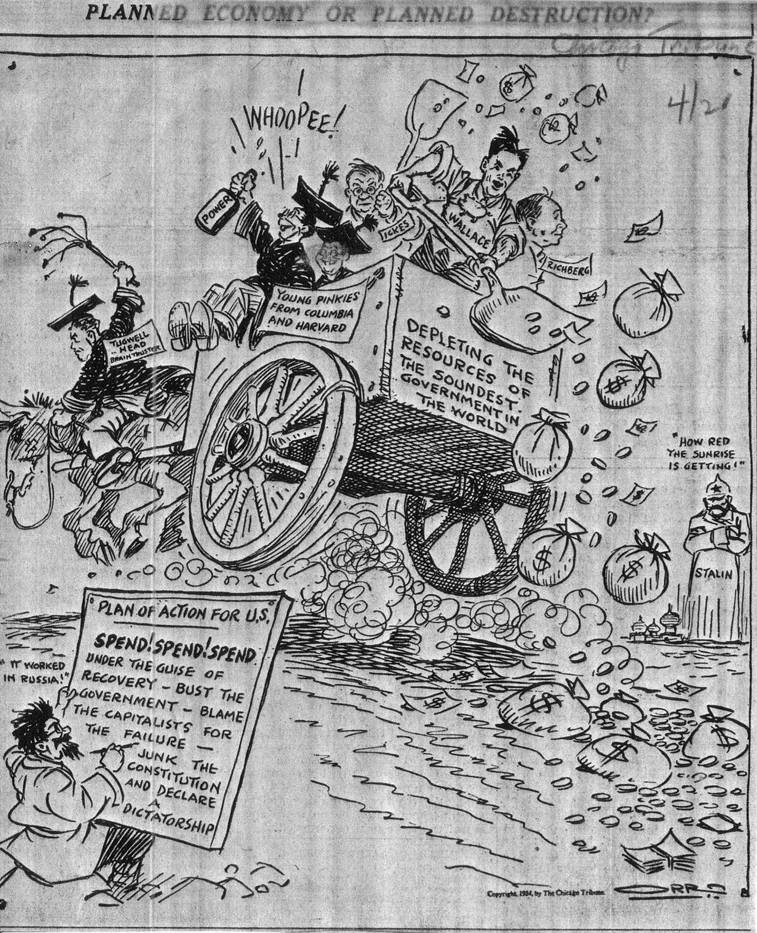
Libertarians used to joke that we were on the verge of another rerun of That '70s Show,with a return to old regulations and high taxation. We should be solucky. The events of the last several months presage a return to the1930s, with a new surge of direct federal involvement in the economy.If we fail to beat back these new controls, future historians may markthis time as the beginning of a long winter of statism and stagnation.
Mike Flynn is director of government affairs at the Reason Foundation.
_______________________________________________________________

 Posts
Posts


